Improving Short-term Solar Proton Event Forecasting with Electron-Based Inputs and Transformer Architectures
Aatiya
Ali
Georgia State University
Poster
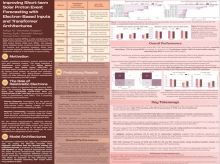
Solar Energetic Particle (SEP) events, specifically Solar Proton Events (SPEs), pose substantial radiation risks to spacecraft systems and human exploration missions. Relativistic electrons propagate more rapidly than protons and typically arrive at Earth earlier, making them a promising physical precursor for short-term SPE forecasting. In this study, we leverage high-energy electron flux measurements from ACE/EPAM and SOHO/EPHIN to predict SPE occurrences at Earth. As a baseline, we implement classical time-series classification approaches, including a Summary Classifier and the Sliding Window Multivariate Time Series (SlimTSF) classifier. The Summary Classifier extracts canonical global statistical features from the full time series, whereas SlimTSF applies hierarchical sliding windows to derive descriptive statistical features from multivariate time-series data. We generate predictions at 15-, 30-, and 60-minute forecast horizons prior to the ~S1-level SPE threshold, defined as ≥10 MeV proton flux reaching ≥10 pfu as measured by GOES. We benchmark this method against a Transformer-based model to evaluate whether multi-head self-attention mechanisms can more effectively capture long-range temporal dependencies inherent in heliospheric particle transport. Models are optimized for F1-score and further assessed using TSS and HSS to ensure operational relevance. Results thus far show that the EPHIN 1.08 MeV electron channel provides the strongest precursor signal across approaches. Our broader goal is to develop an efficient, short-term SPE forecasting tool to support future deep-space initiatives, including the Artemis missions.
Poster PDF
Poster session day
Poster location
5
Meeting homepage