NOAA FY27-29 Ocean Acidification Program Strategic Prospectus Published
The National Oceanic and Atmospheric Administration (NOAA) Ocean Acidification Program (OAP) recently released its FY27-29 OAP Strategic Prospectus outlining its targeted investments over a three-year funding cycle.

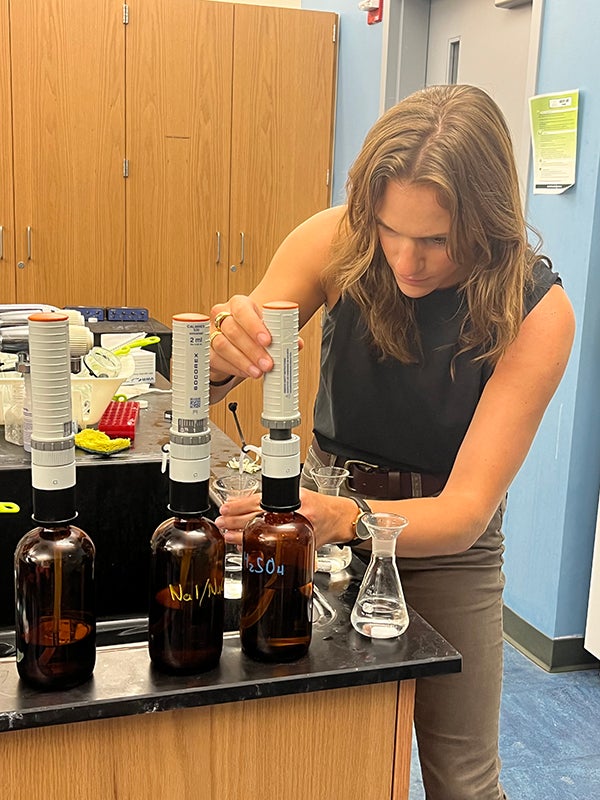
Kaity Goldsmith, program specialist with the UCAR | Cooperative Programs for the Advancement of Earth System Science (CPAESS) oversees a research portfolio of the NOAA Ocean Acidification Program.
Credit: K. Goldsmith
“The Prospectus identifies new priority areas and describes necessary adjustments to ensure our science remains responsive to emerging needs,” said Kaity Goldsmith, program specialist with the UCAR | Cooperative Programs for the Advancement of Earth System Science (CPAESS). She oversees a research portfolio of the NOAA OAP and coordinates the development and drafting of the Prospectus.
The FY27-29 science cycle priorities have been informed by related NOAA planning documents such as the NOAA Ocean, Coastal, and Great Lakes Acidification Research Plan: 2020-2029 (NOAA OA Research Plan) developed with input from NOAA leadership, working groups, researchers, program managers and the OA science community.
The NOAA OA Research Plan identifies three intersecting areas of importance pertaining to ocean acidification including environmental change, biological sensitivity, and human dimensions.
The Prospectus adopts these priorities and outlines several programmatic research investment categories to address them:
- Directed activities: Sustained investments funded through three-year workplans.
- Intramural competitive activities: NOAA-only competitive suite of funding opportunities.
- Decision support products and services: Investments providing delivery of an OA product specifically for a target end user community, and enhanced decision support products and services including models and forecast applications.
- Competitive activities: OAP, or NOAA partner-led, Notice of Funding Opportunities (NOFOs) announced to the public to advance NOAA’s mission.
“By providing this document a full year before the next funding cycle begins, we enable partners outside of NOAA to develop research that aligns with these shifting priorities,” said Goldsmith. “Ultimately, this ensures the efficient and strategic use of public funds to address societal needs related to ocean acidification.”