UCAR | CPAESS educational designers standardize training for USGS Water technicians
Water information is fundamental to national and local economic well-being, protection of life and property, and effective management of the Nation’s water resources. In short, it is crucial for all facets of life on Earth.
UCAR | CPAESS Educational Designers Akio Correll and Kate Dean work with the United States Geological Survey (USGS) Water Resources Mission Area (WMA). Their UCAR-staffed team, Water Workforce Development and Training, is helping to develop a national standardized training program for hydrologic technicians to ensure consistency across the USGS in collecting that water information.
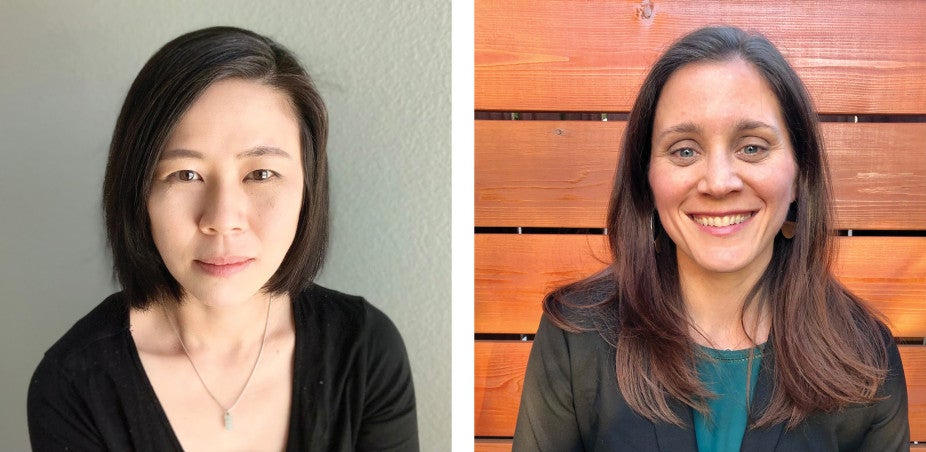
UCAR | CPAESS Educational Designers Akio Correll and Kate Dean work with the United States Geological Survey (USGS) Water Resources Mission Area (WMA) on the Water Workforce Development and Training team developing a national standardized training program for hydrologic technicians.
Credit: A. Correll and K. Dean
"We need water for survival, but we also need consistency in data collection methods and processes in order for regulatory entities outside of USGS to make decisions," said Dean.
USGS hydrologic technicians are responsible for monitoring stations and gages at nearly 1.9 million sites across all 50 states. The sites provide data on streamflow, groundwater, water quality, and water use and availability. The compilation of those data – over 135 years worth – is freely available to everyone in Water Data for the Nation.
Making sure technicians have the most robust training is central to the WMA and its role in providing high-quality water data to support local, regional, and national decision making.
Until July 2025, a team of UCAR | CPAESS professionals supported the WMA in workforce training and development, from budgeting and coordinating the learning management system (LMS) to delivering Train the Trainer Workshops to USGS instructors. However, reductions in USGS funding necessitated reductions in staff. Correll and Dean are the two remaining members of the original team of ten. Fewer in number, they needed to be much more targeted in their approach to supporting the design and development of effective technical trainings.
“We had to craft a strategic plan that would enable us to continue to bring our UCAR expertise to USGS colleagues and deliver it with the greatest impact,” said Correll.
With that, they reached out to the WMA’s Water Training Advisory Council (WTAC) whose charter includes providing recommendations on training priorities for USGS staff. USGS Senior Science Advisor Tim McHale and Marion, VA Field Office Chief Dennis Adams, who chairs the Council, leveraged Correll and Dean’s expertise over the last year to refine the Council’s mission, meeting protocols, and decision-making processes. With their support, the Council has formed committees focused on four training priorities, including one dedicated to expanding and standardizing robust training opportunities for early-career hydrologic technicians.
“Hydrologic technicians are the largest job series within USGS Water,” said Dean. “These are the folks who are out in the most remote places – in streams measuring water levels and discharge, measuring water contaminants, and predicting floods. Their work is essential to data integrity.”
Historically, each Water Science Center across the U.S. has been responsible for training their technicians and as a result, the training lacked consistency. Correll and Dean are helping to change that construct.
“A direct result of our work with WTAC is that the Council is now engaging more closely with Water Science Centers, offering modular bootcamps that are aligned to national standards,”said Correll. Constructing materials with standards in mind means that hydrotechs receive high-quality training regardless of which center they serve.
Previously, introductory training for early-career technicians was available only at the national level, which presented scheduling and cost barriers. To address the training gap, select Water Science Centers have developed bootcamp-like programs for their local staff.
Correll and Dean are now partnering with senior technicians from these centers to synthesize and standardize the structure, content, practice exercises, and related materials from those bootcamps to make them accessible to every center and new technician across the Water community.
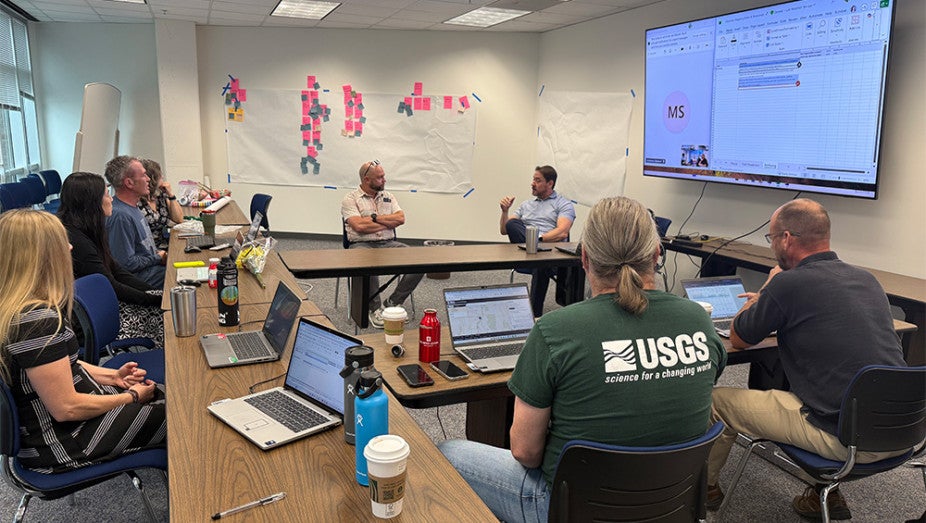
Akio Correll and Kate Dean met with the Modular Bootcamp Framework Committee for a week in Denver where the group mapped out a curriculum.
Credit: K. Dean
The WMA is poised to hire about 120 new hydrologic technicians so there will be a large cohort needing this foundational training.
Correll and Dean are drawing on their unique expertise in education and learning experience design to ensure the curriculum is both effective and engaging for participants.
“They'll get a week of instruction focused on hands-on work in the field, and then take time to practice and apply what they've learned,” said Dean. The next month they’ll receive a second week of instruction and practice followed by a third week of learning. The course is structured to reinforce retention so that professionals can apply what they’ve learned when working in the field.
In the end, Correll and Dean note the value of building relationships with others to establish trust and promote awareness in order to accomplish goals that benefit USGS and UCAR. As a result, they are now fielding requests from USGS Water leadership and the Water Training Advisory Council to help establish new committees and support additional early-career training initiatives. .
They also credit CPAESS leadership – Director Hanne Mauriello and Deputy Director Cindy Bruyère – for providing key institutional knowledge and guidance that proved crucial to shaping a stronger alliance between UCAR and USGS.
“It’s gratifying to know that the organizations see our value and are relying on us for our expertise. There is much more to do,” they said.