Q&A with WINGS Fellow Kaitlin Huelse
WINGS Fellow Kaitlin Huelse shared her progress on modeling Great Lakes wave formation, why it’s an important phenomenon to study, and how the WINGS Fellowship has supported her growth as a researcher. And along the way, how motherhood has shaped her views on the value of science.
Managed by UCAR | CPAESS, the NOAA Weather Program Office (WPO) Innovation for Next Generation Scientists (WINGS) Dissertation Fellowship aims to foster the next generation of science, technology, engineering, and mathematics (STEM) scholars to grow the future workforce of America’s Weather Enterprise.
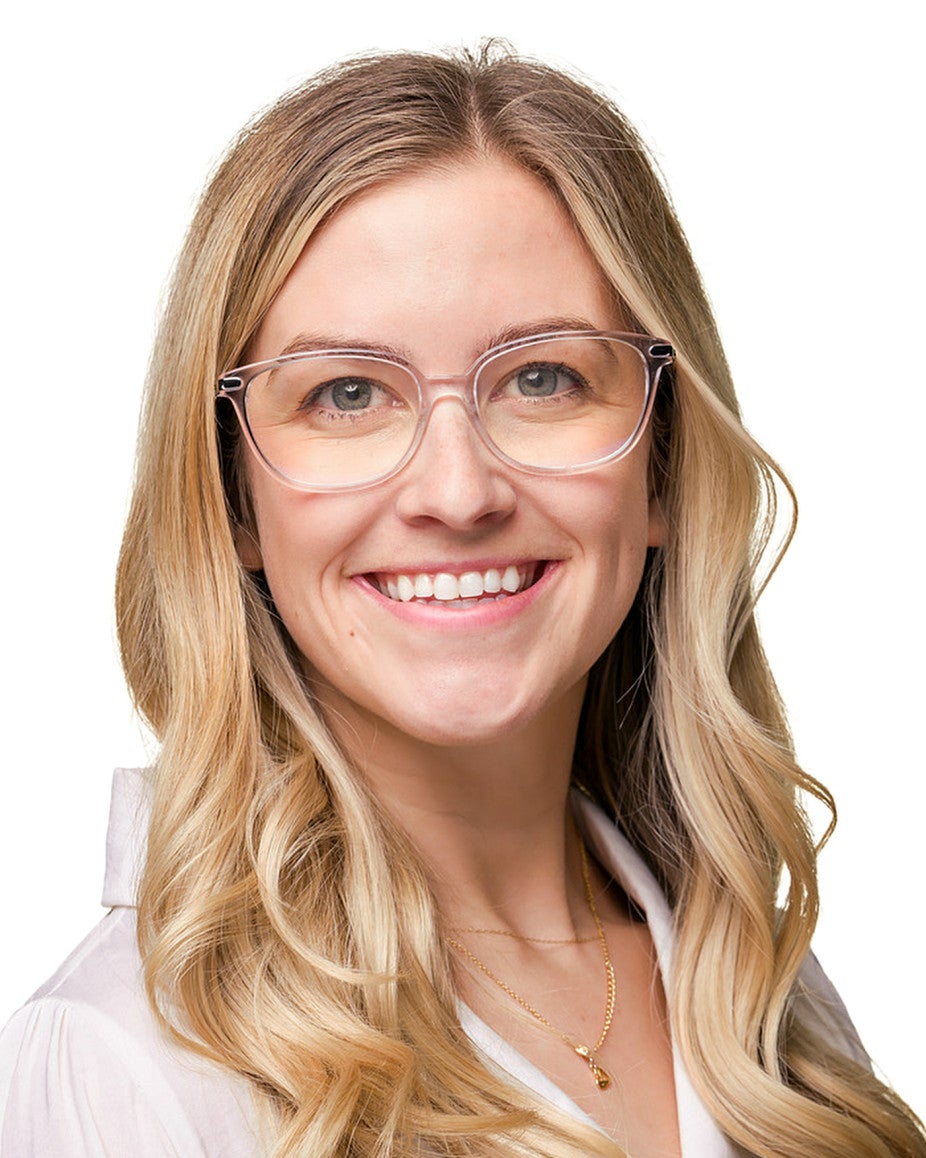
WINGS Fellow Kaitlin Huelse (formerly Pereira) is one of three students selected for the WINGS Class 2. She is studying the “ improvement of lake representation in operational weather forecasting” at the Colorado School of Mines.
Her research is aligned with EPIC.
Credit: K. Huelse
What led you to study how the Great Lakes are represented in operational weather forecasting?
My interest in the Great Lakes really started when I was completing my master’s degree at the Colorado School of Mines. I applied to be a tester for the Finite Volume Community Ocean Model (FVCOM) which is an ocean circulation model. This was my gateway into modeling, a process that feels like a big physics puzzle and is the reason I fell in love with modeling.
My advisor, Eric Anderson, is the leading researcher for physics-based modeling and the Great Lakes at the Colorado School of Mines. He recognized my passion for modeling and our discussions about the parallels and divergences between the Great Lakes model and the ocean models, along with their respective physics, led to a dissertation topic.
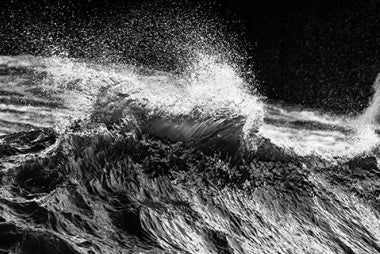
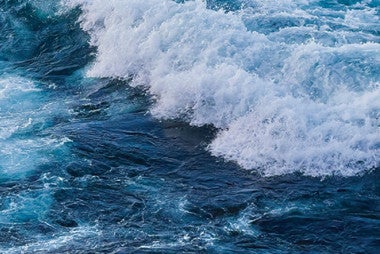
While my research teases out some key differences, I think many people would be surprised that the Great Lakes operate very similarly to the ocean. Wave models used in the Great Lakes, such as Wavewatch are based on those developed for ocean waves.
The biggest difference between them that I am analyzing is the fetch limitation. [The uninterrupted distance over which the wind blows without significant change in direction.] Because the Great Lakes are enclosed this gives them a very limited fetch to actually generate waves whereas ocean waves can develop over much longer fetches..
The underlying principles of wave growth are actually very similar but the character of the waves is different: the Great Lakes produce younger and steeper waves whereas ocean conditions can include both locally generated wind waves and swell arriving from distant storms.
Why is this research important? (Why should people care?)
Millions of people rely on the Great Lakes. From a top-level view, commercial shipping moves substantial volumes of goods across the Great Lakes. One click deeper – and more specific to my research – is that if we can improve the way the wave model represents the waves in the Great Lakes or or how wind interacts with the lake surface, I think there will be so many more downstream effects.
For instance, I am particularly focused on the fluxes and how accurately they are represented in the models. The more accurate their representation, the better we can predict things like storms, heavy snowfall associated with lake effect snow, or dangerous waves. Improved forecasts keep communities safer.
Is your current research informed by your most recent Water Resources Research paper on ice floe size parameterization in Great Lakes ice prediction?
I began the Water Resources Research paper before my fellowship but it was published this year. The crux of that paper was to apply an ice floe length climatology in the model so that we could represent actual ice size rather than applying a prescribed length.
That said, the process of fine-tuning parameterizations little-by-little and seeing how much closer we can get to reality, whether ice floes or waves, is a process that anchors my work. Sometimes these models can feel like a game of Whack-a-Mole because if you change one thing, three other things pop up and you don’t know what you should attribute that change to. It’s a big physics puzzle that must be pieced together.
What is one of the big unanswered questions in this field or about this issue?
As I mentioned, my experiment is really focused on the transfer of energy from the wind at the lake surface and the fetch limitation in the Great Lakes that confines wave development. I'm looking at those parameters inside of the operational wave forecast model, understanding the scale, and tuning them to the Great Lakes environment. To do this, I am using two new sources of data – buoy data and high-resolution satellite data.
We now have winter spotter buoys in the Great Lakes. We've never before had in-situ winter wave data because the buoys are pulled out of the water before ice forms around them. The buoys were deployed in 2023 giving us three consecutive winters of data.
This provides us a continuous story in time that includes in-situ data along with imagery from space to help evaluate and understand the winter wave climate. What is the character of the winter waves and how well are we modeling them? Together, these data can help validate our forecasting models. This is the first part of my research and my dissertation. And then the second part is answering the questions of how far can we actually trust these algorithms that were tuned on ocean data for the Great Lakes.
If I had unlimited time and resources, I would love to look at the ice physics and the attenuation of waves underneath the ice because I feel like this is another understudied area and there's so much shipping and navigation that still happens in the winter.
Did anything about your findings surprise you?
Undertaking a PhD results in a lot of left and right turns. It's not linear. At times I thought I was finished because I found a certain physics phenomenon. But then I discovered that I’d just opened a can of worms.
For example, I was expecting our model to perform much worse in the winter because the waves are bigger and wind gusts stronger than in the summer, but it turns out that when you examine the absolute error, the two seasons are actually quite similar.
Across summer and winter, I am examining whether model errors concentrate in a particular regime of young, steep waves. I'm still putting the whole story together, but I think that makes sense because that is the dominant wave regime of the Great Lakes. This is the first chapter of my dissertation.
How has the WINGS Fellowship supported your research?
I’ve returned to my research after having my first baby, and motherhood has given me a stronger sense of purpose. It feels good to pursue research I’m passionate about while also being a mom, both parts of my life are deeply fulfilling. I hope my son grows up seeing science as something he can be part of and that watching me work encourages him to ask questions and stay curious.
In terms of WINGS specifically, it has been central to my successes in my PhD. It is uniquely structured around pairing researchers with NOAA mentors. As a result, I've had the opportunity to work with brilliant mentors like Jessica Meixner and Hendrik Tolman – they have both really shaped and grown my work in ways that wouldn't have been possible without this fellowship.
Their feedback has made my work very relevant and helped me hone in on things that are actually important operationally. Without this fellowship I would have been situated adjacent to the research-to-operations pipeline rather than inside of it.
What’s next for you in terms of research and/or professionally?
In the near term I am finishing my dissertation. I'm writing and hopefully finishing the first chapter soon. Professionally I have really grown a deep love for physics and hydrodynamics and modeling and I hope to make a career out of it and keep contributing to science because that really fills my cup. I will be joining the job market next year. So, if you know anyone who needs a person to explain wind stress at a dinner party or talk for hours about the Edmund Fitzgerald, send them my way!
Kaitlin Huelse will share more about her research on Wednesday, October 21, 2026, 11:00 a.m. MT during a CPAESS Seminar.