Connecting the Cosmos: A Look Back at the NASA 5th Eddy Cross-Disciplinary Symposium
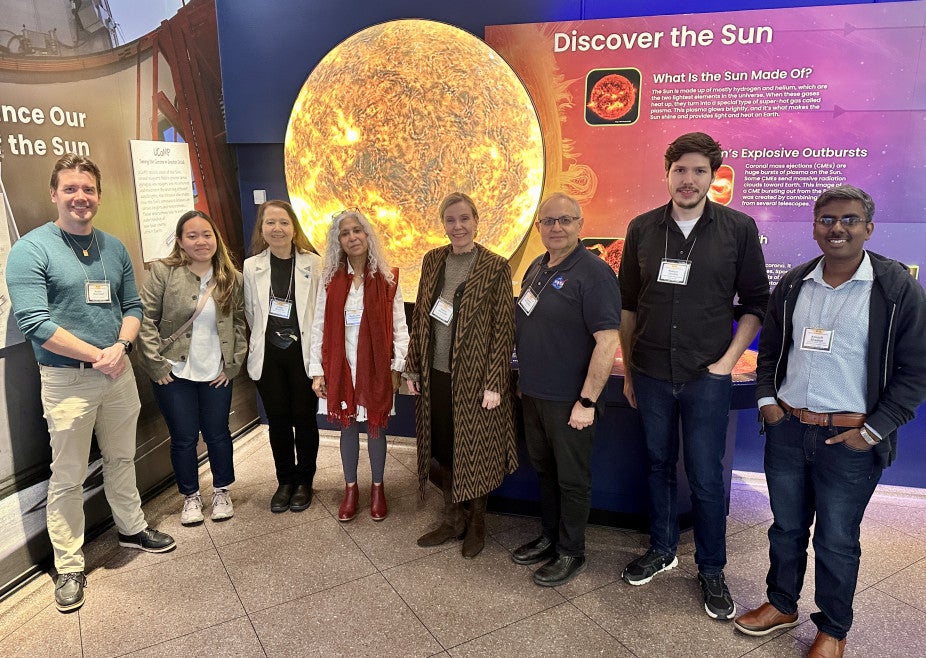
From May 4–8, 2026, scientists, engineers, early-career researchers, and thought leaders from around the world gathered in Boulder, Colorado for a week of big questions, lively debate, and genuinely cross-disciplinary discovery. The NASA 5th Eddy Cross-Disciplinary Symposium, presented in collaboration with NASA's Living With a Star Program and the Cooperative Programs for the Advancement of Earth System Science (CPAESS), brought together great minds across the interdisciplinary field of heliophysics. For SPS | CPAESS Deputy Director Dr. Cindy Bruyère, who helped open and chair the first day's proceedings, the gathering exemplified what happens "when an event becomes a community."
The Eddy Symposia have long been known for their frontier-thinking energy, and the 5th installment was no exception. This year's gathering was organized around the theme "Star–Planet Interactions in the Solar System and Beyond," explored through the dual lenses of open data and artificial intelligence. Within that broad theme, participants worked across three focused subthemes: Solar Influence on Earth and Planetary Environments, led by Robert Jarolim and Robin Ramstad; Risk and Resilience to Space Weather Disruption, led by Ankush Bhaskar and Tom Berger; and From Heliophysics to the Moon and Mars: The Impact of the Sun on Space Exploration, led by Vladimir Airapetian and Mei-Yun Lin. These weren't just session titles — they became the organizing scaffolding for days of deep collaborative work in breakout groups, with participants ultimately planning white papers to carry the conversations forward after the symposium ended.
The symposium opened with a bang. Andrés Muñoz kicked things off with a keynote on the Surya foundation model, an experiment in open, community-oriented AI — a fitting opening that signaled just how central AI and open data would be to the week's conversations. Hanli Liu then set the scientific stage with a talk on solar influence on Earth and planetary systems, followed by Monty Spencer from NOAA's Space Weather Prediction Center on forecasting in support of the Artemis II mission. Shannon Curry, Principal Investigator of NASA's MAVEN mission, rounded out the day with a presentation on solar activity at Mars — past, present, and future. The day wrapped up with a welcome reception at NCAR's iconic Mesa Lab, where the real networking and relationship-building could begin.
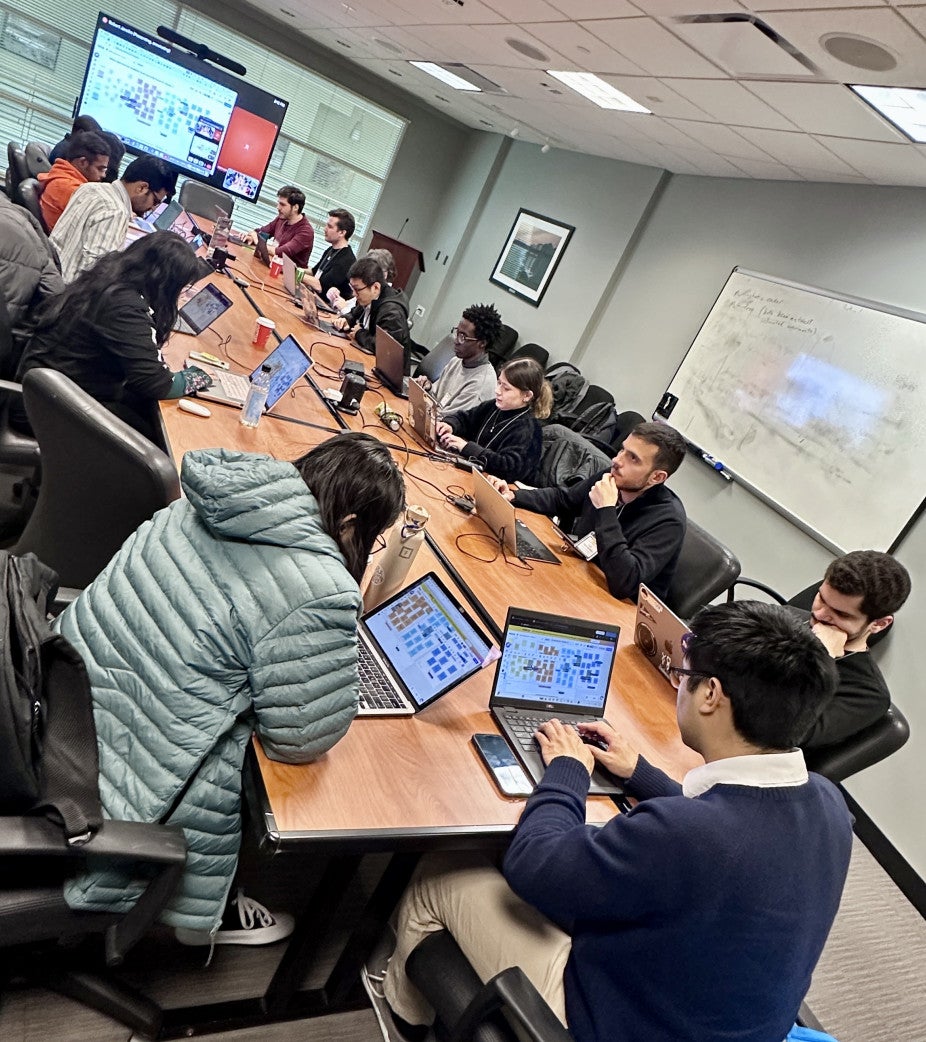
The symposium showcased just how wide-ranging the science really was. Talks touched on everything from plasma physics at Saturn and Earth's radiation belts to the practical challenges of satellite operations in low Earth orbit. Researchers presented on topics as varied as ionospheric irregularities during major geomagnetic storms, AI-assisted real-time monitoring of solar radio activity, and 3D reconstruction of the heliosphere using neural radiance fields. Next the sessions zeroed in on space weather risk and resilience, with Tom Berger presenting on the link between accurate forecasting and societal resilience, and Marcin Pilinski examining how thermospheric space weather affects satellite operations in low Earth orbit. Other talks probed GPS signal disruptions during solar cycle 25, geomagnetically induced currents in the eastern United States, and next-generation solar wind modeling using neural operators — a vivid illustration of how heliophysics now sits at the intersection of space science, engineering, and machine learning. Each afternoon, participants broke into working groups to dig deeper into their subtheme, building toward the synthesis and white-paper planning that would occupy much of Thursday and Friday.
Wednesday's banquet featured special presentations from Scott Penberthy, Director of Applied Artificial Intelligence at Google, and former astronaut and NASA Chief Scientist John Grunsfeld — a pairing that spoke to the symposium's unique ability to bridge fundamental science, applied technology, and human exploration.
The theme — From Heliophysics to the Moon and Mars — brought some of the week's most far-reaching science to the fore. Presentations explored how lunar metallic ions travel earthward through the magnetosphere, what ancient lunar regolith can tell us about the early solar wind and Earth's geomagnetic history, and how solar wind properties vary statistically across the planets. One talk even ventured beyond our solar system entirely, examining radio aurorae and radiation-belt emission from a nearby ultracool dwarf star — a reminder that the questions being asked here connect to the search for habitable worlds far beyond the Sun. A lunch panel dedicated to early-career researchers, an important tradition that reflects the symposium's commitment to growing the next generation of heliophysicists.
The final day brought everything together. Each of the three working groups reported out on their discussions, and participants spent the morning incorporating feedback into white paper plans and notes — the tangible products that will carry the symposium's intellectual work into the broader scientific community. The week closed with an early-career-led panel discussion, a fitting bookend that put emerging voices at the center of the conversation one last time. Explore the detailed agenda with presentations here and recordings here.
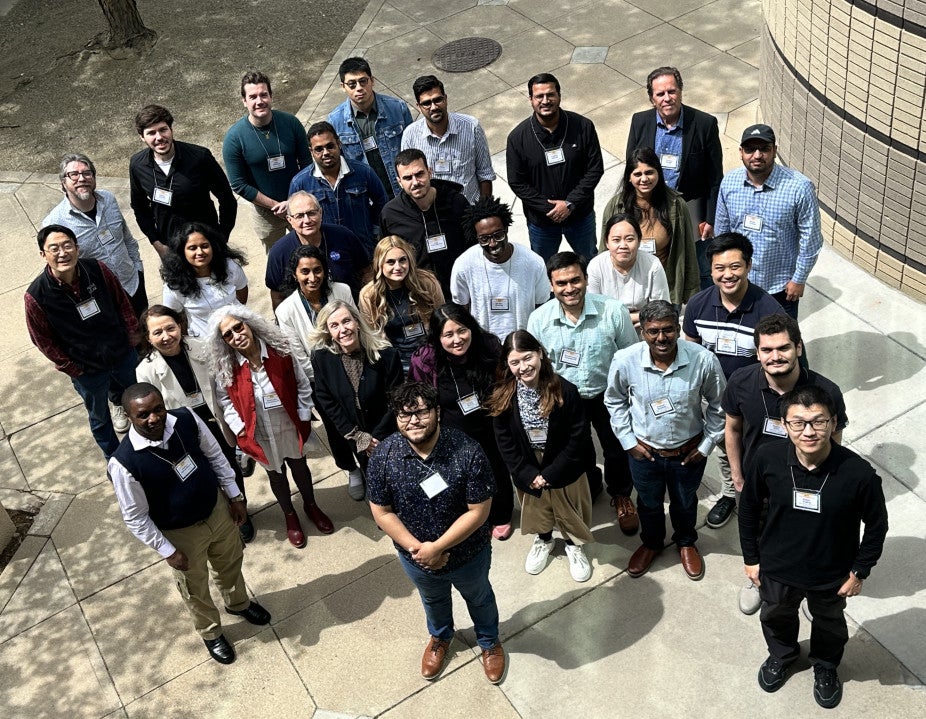
What makes the Eddy Symposia special isn't any single talk or session — it's the deliberate mixing of disciplines, career stages, and institutions that creates conditions for genuinely new thinking. The steering committee brought together NASA scientists, NSF NCAR researchers, university faculty, and early-career fellows from institutions spanning the US, India, Spain, and beyond. The result was a week where a solar physicist, a machine learning engineer, a planetary scientist, and a space weather forecaster could find themselves working through the same problem from completely different angles — and coming out with something none of them would have reached alone.
The whole event was what NASA's Dr. Madhulika "Lika" Guhathakurta, NASA Senior Advisor for New Inititives, had in mind when she remarked that "Eddy already sparked ignition" — capturing the sense that this gathering doesn't just discuss ideas, it sets them in motion. The 5th Eddy Cross-Disciplinary Symposium made clear that understanding our star and its relationship with the planets is not a single discipline's problem. It's everyone's.