Where Science Meets Society: A Look Back at the 2026 Space Weather Workshop
From April 27 to May 1, 2026, Boulder, Colorado played host to one of the most important annual gatherings in the space weather world. The 2026 Space Weather Workshop — and this year's turnout made clear just how much the field has grown and how urgently the broader world is paying attention.
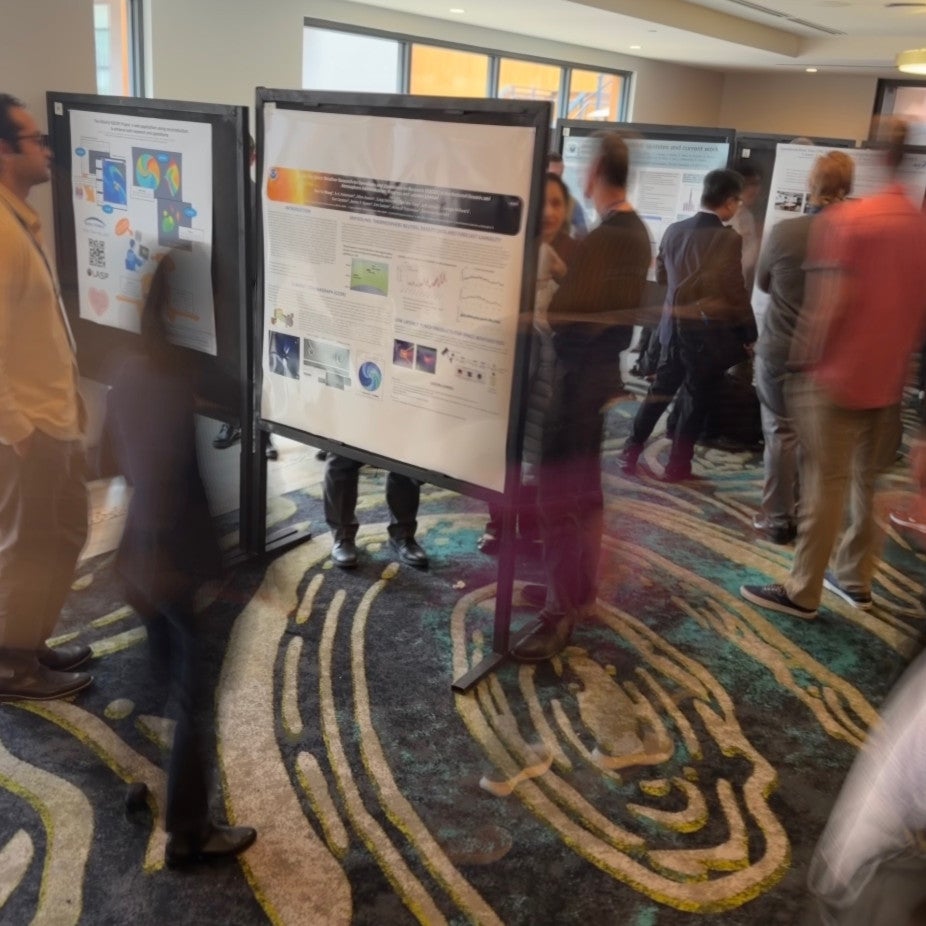
The numbers speak for themselves. A total of 582 people registered for the event, with 465 attending in person and 104 joining virtually. Participants came from 23 nations, reflecting the truly international character of space weather science and preparedness. Among them were 67 students — 47 in person and 20 virtual — and 112 early-career professionals, a testament to the pipeline of talent the community is actively cultivating. Over the course of the week, participants engaged with 100 oral presentations, including 19 poster lightning talks, and explored 147 poster presentations — a remarkable volume and variety of scientific exchange packed into five days.
This year's theme, Space Weather & Society: Transforming Services & Science to Meet User Needs, reflected the workshop's enduring commitment to connecting research with real-world applications (see detailed agenda). That connection was evident from the very first sessions, which brought together voices from the White House Office of Science and Technology Policy, the National Security Council, and Congressional staff alongside scientists and forecasters to address the policy landscape around space weather preparedness. It set a tone that carried through the entire week: this is not just a scientific question, it is a societal one.
The Monday pre-workshop day alone showcased the breadth of the gathering, with sessions ranging from a Department of Homeland Security (DHS) mini-workshop on space weather benchmarks for critical infrastructure, to international coordination meetings with the ISES and WMO, to a dedicated student program — all happening simultaneously under one roof.
The workshop then dove into the science and policy of national resilience, with representatives from NOAA, NASA, NSF, DHS's Cybersecurity and Infrastructure Security Agency, and the commercial sector all weighing in on how the nation prepares for and responds to space weather events. The afternoon turned to aviation, with presentations from Delta Air Lines, the UK Met Office, and NASA Langley Research Center exploring how space weather affects flight operations, crew radiation exposure, and real-time decision-making at 35,000 feet.
Sessions tackled the challenges of operating satellites in low Earth orbit — from thermospheric drag modeling and probabilistic orbit decay tools to the operational realities faced by companies like Iridium — while the afternoon shifted to emergency management, featuring planners from New York City, North Dakota, and the Department of the Interior who are actively integrating space weather into their preparedness frameworks. The Wednesday evening banquet featured a presentation on aurora photography and space weather data, bringing a sense of wonder to a week of rigorous science.
As the workshop continued the focus was on human space exploration, with detailed discussions of space weather support for the Artemis II mission — from NOAA forecasters and NASA mission planners to Lockheed Martin engineers and commercial lunar payload teams. Sessions addressed the electric power grid, with researchers, utility operators, and regulators examining geomagnetically induced currents, new modeling tools, and lessons learned from the January 2026 geomagnetic storm. A special session highlighted transformative new observing capabilities, including the PUNCH mission, the SOLAR-1 spacecraft at the L1 point, and the European Space Agency's deep-space Vigil mission — the next generation of eyes on the Sun.
The week was brought to a thoughtful close with a session dedicated to workforce development. Speakers addressed training for public engagement, cultivating undergraduate researchers, and building an AI-enabled space weather workforce, before the program turned to satellite navigation — examining how GPS scintillation during recent major storms affected aviation and precision positioning systems.
Throughout the week, students were far from passive observers. Dedicated programming included speed mentoring, resume writing workshops, workforce development sessions, and hands-on training with CCMC ISWĀ tools — giving the next generation practical skills alongside scientific inspiration. Student networking lunches ran midday on both Tuesday and Thursday, woven into the fabric of the program rather than treated as an afterthought.
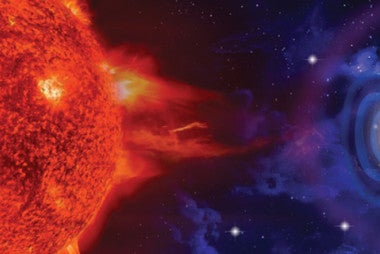
This event was co-sponsored by the NOAA Space Weather Prediction Center, the NSF Division of Atmospheric and Geospace Sciences, and the NASA Heliophysics Division, and organized by UCAR's CPAESS alongside a community-based committee, the 2026 Space Weather Workshop exemplified what this gathering has become over its three-decade history: the place where forecasters and physicists, policymakers and pilots, utility engineers and early-career students come together to make sense of a Sun that affects all of us — every day.