NOAA’s EPIC Program Office launches UFS Ambassador Program
NOAA has long recognized the strategic role that scientific partners like the UCAR | Cooperative Programs for the Advancement of Earth System Science (CPAESS) play in pushing innovation, enhancements, and efficiency in government research and programs.
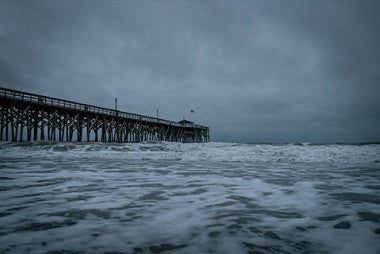
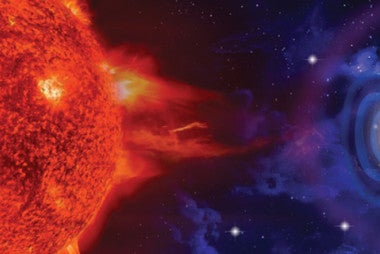
This is especially true of the Unified Forecast System (UFS) housed within NOAA’s Earth Prediction Innovation Center (EPIC). It is a sprawling suite of Earth system models for regional and global applications that relies on the community of academic and government researchers and modelers for improvements. These improvements, grounded in research findings, translate to better operational forecasts issued by the National Weather Service (NWS) for hurricanes, air quality, space weather or medium-range weather, among others, that touch everyone every day.
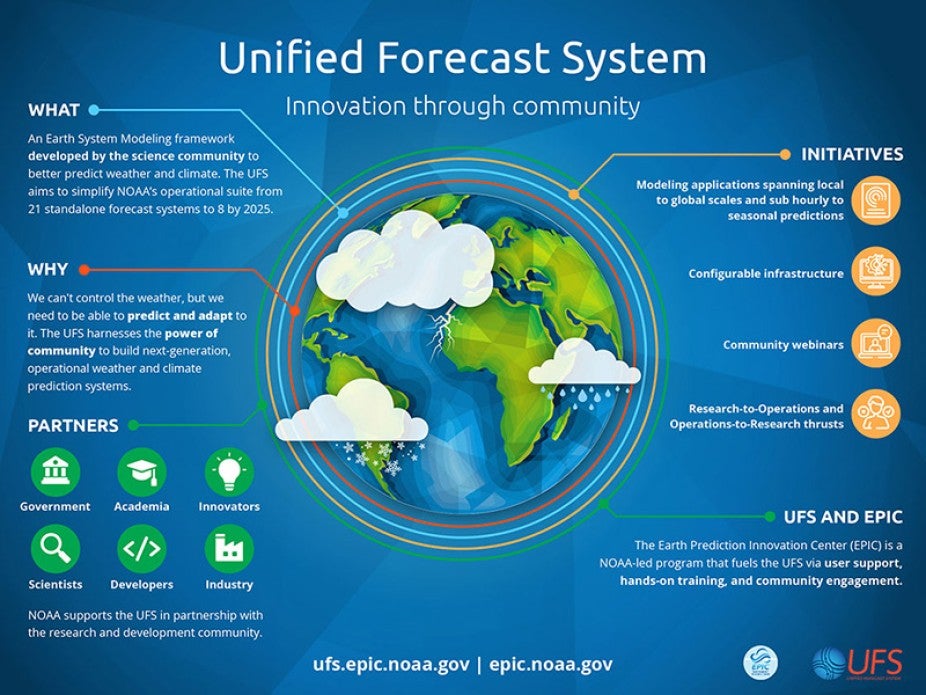
NOAA supports the UFS in partnership with the research and development community. The UFS Ambassador Program aims to build on this partnership.
Credit: NOAA
For this reason, EPIC, in partnership with UCAR | CPAESS, has launched the UFS Ambassador Program. It is a volunteer opportunity designed to encourage university students, faculty and researchers to lend their talent and expertise to not only engage with the program, but to build a stronger bridge between modelers and end users for public benefit.
Alison Gregory is the community engagement lead for the UFS Ambassador Program and UCAR | CPAESS program specialist.
Credit: Alison Gregory
“In order to expand awareness about the UFS research community we opted to add a student engagement angle, making it possible for anyone to participate based on their interests,” said Alison Gregory, community engagement lead for the UFS Ambassador Program and UCAR | CPAESS program specialist. “If students or faculty have an interest in UFS modeling, numerical weather prediction or weather forecasting, the ambassador opportunity could be a great fit, whether it’s in the classroom, the research lab or translating information for the public.”
Students can participate in one of three tracks:
- Technical: Learn more about the UFS framework and then, make recommendations for code improvements or practice debugging.
- Strategic: Review the UFS Student Engagement Plan and provide feedback and recommendations, from a student perspective, on whether the approach will work and accomplish its goals.
- Outreach: For those with a flair for social media or web development, review existing social media, infographics, and web resources and share with your networks.
The UFS Ambassador Program was inspired by work from students in the Lapenta Student Internship Program that was created by the NWS in remembrance of William Lapenta and his scientific and leadership contributions to NOAA. Interns have the opportunity to work alongside NOAA scientists to tackle forecasting problems, improve forecasting or visualization tools, or build on existing decision support tools for communications and more. This linkage makes Lapenta Interns natural ambassadors for the UFS.
How have interns or fellowship recipients worked with the UFS to improve it, explain it or share its value?
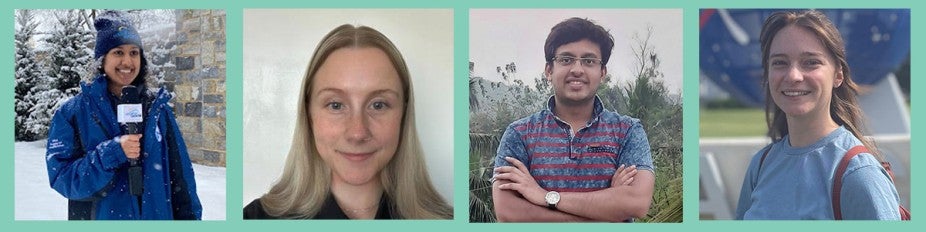
Left to right: Alekya Srinivasan, first Student Ambassador of the UFS and 2023 Lapenta Intern; Samantha Lang, UFS Ambassador; Shreyas Rajendra Dhavale, WINGS Fellow; Emily Faber, WINGS Fellow
- Alekya Srinivasan, the first Student Ambassador of the UFS and 2023 Lapenta Intern, shared her perspectives in a presentation to the NOAA Weather Program Office, “Representation matters: Insights, Strategies, and Perspectives from the Inaugural UFS/EPIC Student Ambassador” and a paper, “How the UFS Benefits Academia.”
- Samantha Lang, UFS Ambassador, explored and reported on outreach activities accomplished during her Lapenta Internship and formulated recommendations on ways to involve students with the UFS.
- Shreyas Dhavale, a NOAA WINGS Fellow, proposed operationally-oriented research related to the Indian Summer Monsoon and ways to improve forecasting with the UFS around these events.
- Emily Faber, a NOAA WINGS Fellow and modeler, crafted a research proposal aimed at better representing aerosols, like mineral dust, in the UFS model in order to improve climate forecasts.
Currently, Gregory mentors the program interns in each track. In the longer term, she envisions growing a network of universities with a core of professors and students interested in UFS capabilities. “They can serve as our model universities for what a NOAA-UFS-University partnership would look like,” she said.
Anyone with questions about the UFS Ambassador Program please reach out to Alison Gregory