On the first Saturday of November, the National Science Foundation’s NCAR Mesa Lab throws open its doors for Super Science Saturday. Among the CPAESS volunteers this year was David Stuebing, a human resources administrator.
The Indian Summer Monsoon, active from June to September, delivers about 80% of India’s annual rainfall in just four months. This phenomenon is called the Monsoon Onset Vortex (MOV), and it is precisely what interests Shreyas Dhavale.
Aissatou Faye is a UCAR |Cooperative Programs for the Advancement of Earth System Science (CPAESS) Visiting Scientist at the NOAA Climate Prediction Center (CPC) – African Desk. Faye’s work centers on improving subseasonal to seasonal (S2S) forecasts using existing CPC forecast models to better predict extreme climate events and hazards such as floods and droughts across Africa.
November 19, 2025: Emily Rountree, PhD, "Federal to Local Partnership Collaborations as We Adapt to Future Climate Risk in the Central Midwest" Watch Emily Rountree's Recording
New stars were shining during the 19th year of the NASA Heliophysics Summer School held in Boulder, Colorado from August 12 - 20, 2025. Learn all about it!
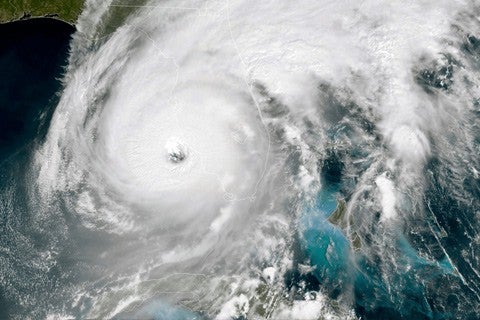
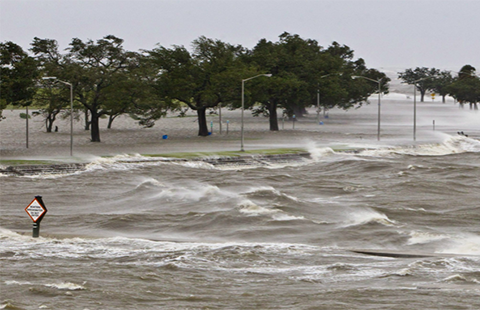
About 41 million people live in counties along the U.S. Atlantic coast, making them vulnerable to rapidly-developing hurricanes, one of the most devastating natural hazards. Pinning down a hurricane’s likely track and intensity are crucial to ensuring public safety.
A sincere congratulations to our wonderful former staff members whose awards at the upcoming American Meteorological Society (AMS) annual conference were just announced.